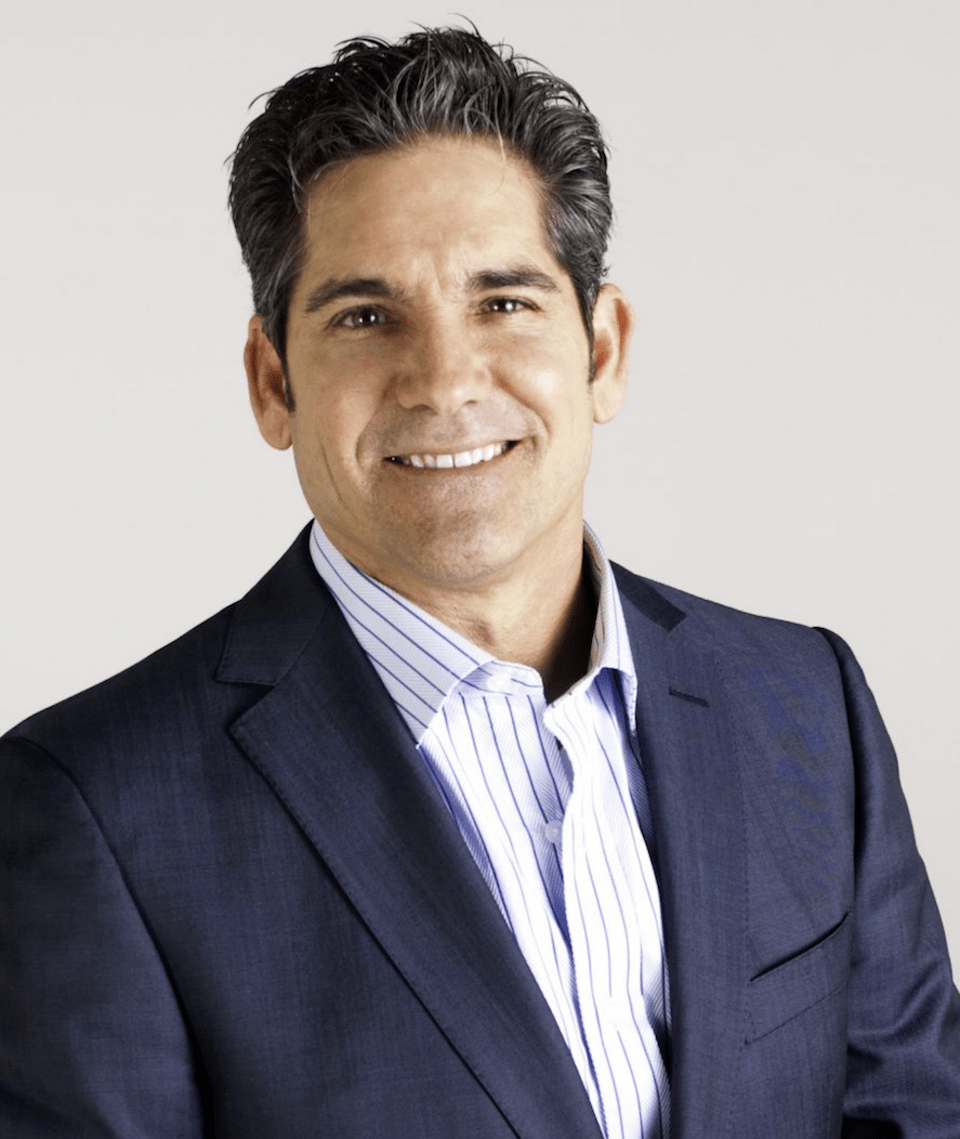
How a broke, drug-addicted kid from Louisiana transformed himself into one of America’s most polarizing — and prolific — business empires.
A Childhood Defined by Loss
Grant Timothy Cardone was born on March 21, 1958, in Lake Charles, Louisiana — one of five children raised in a working-class household. His father, Curtis Louis Cardone, owned a grocery store and had trained as a stockbroker, giving the family modest but meaningful roots in entrepreneurship. That foundation, however, was ripped away far too soon.
When Grant was just 10 years old, his father died of a sudden heart attack, leaving his mother, Concetta, to raise five children entirely on her own — with no formal job training or work experience. The loss was staggering, and it sent Grant into a prolonged tailspin that would define his teenage and early adult years.
“Growing up without the direction of a father was difficult. Most of my teenage and early adult years I was described as ‘out of control’ and ‘troubled.’”
To compound the grief, Grant later lost his eldest brother Curtis in his early twenties. The accumulation of trauma, instability, and poverty set the stage for what he has openly described as years of self-destruction.
Addiction, Failure, and Hitting Bottom
Between the ages of 15 and 25, Cardone fell deep into drug addiction. He suffered three overdoses and spent those years, by his own account, surrounded by the wrong people and making consistently bad decisions. Despite enrolling at McNeese State University — where he eventually earned a degree in accounting in 1981 — the academic achievement did little to stabilize his life. After graduation, he struggled to keep jobs and remained in the grip of substance abuse.
At 25, after hitting rock bottom, Cardone entered a rehabilitation center. It was the turning point. Upon leaving treatment, he made a decision that would alter everything: cut out every negative influence, every destructive friend, every environment that had previously pulled him back in — and channel all of that restless, chaotic energy into something productive.
That something, it turned out, was sales.
Learning to Sell: The Career That Changed Everything
Fresh out of rehab, Cardone had an accounting degree but few prospects. He took a job as a car salesman — a position he openly admitted to hating. But his mother’s advice stuck with him: an investment in knowledge always pays the best interest. So he dove in, studying everything he could about sales psychology, human behavior, and the automobile industry.
“I hated sales but also hated my life. I especially hated being broke. I decided I was going to get good at that job.”
The results were transformative. He watched his monthly income double almost immediately, and he kept learning, kept pushing. Eventually, Grant Cardone became one of the top car salespeople in the country. The experience didn’t just teach him how to sell cars — it gave him an entirely new philosophy about money, persistence, and what he called “massive action.”
After his success in auto sales, he transitioned into sales training, launching workshops and programs for businesses across multiple industries. He later became president and CEO of Freedom Motorsports Group Inc., and relocated from Louisiana to Houston, then to La Jolla, California, where he lived for 12 years before eventually settling in the Miami area. By the time he was 30 years old, Cardone had accumulated his first million dollars — not by spending lavishly, but by reinvesting his profits into assets, particularly real estate.
The Real Estate Pivot
Even as Cardone’s sales training business flourished, he increasingly directed his excess cash into multifamily real estate. His philosophy was straightforward: don’t buy depreciating assets, don’t sit on cash, and don’t treat your primary home as an investment. Instead, funnel capital into large apartment complexes that generate consistent rental income.
In 2017, he formally launched Cardone Capital, a real estate investment firm focused exclusively on multifamily properties. The firm grew rapidly, and by 2024, Cardone Capital claimed approximately four billion dollars in assets under management. Cardone also opened portions of the fund to non-accredited investors — a controversial but accessible approach that brought in a massive audience of everyday people looking to invest in real estate alongside him.
His sales career didn’t disappear — it became the engine of his brand. He founded Cardone University, a sales training platform with tens of millions of subscribers, authored multiple bestselling books including The 10X Rule and Sell or Be Sold, and built a media empire around his 10X Growth Conference — billed as one of the largest entrepreneur events in the world.
References
- Wikipedia — Grant Cardone. Covers biography, early life, career timeline, and legal history. en.wikipedia.org/wiki/Grant_Cardone
- The EduNetwork — From Broke to Billionaire: The Inspiring Grant Cardone Success Story. Detailed narrative of his rehabilitation, early sales career, and path to real estate. theedunetwork.com
- Clever Tykes — Grant Cardone and the simple idea that changed everything. Sourced from Cardone’s own LinkedIn writings on growing up without his father. clevertykes.com
Early Life — Born in Lake Charles, Louisiana in 1958, he lost his father at age 10, which sent him into years of poverty and instability. Between 15 and 25 he battled serious drug addiction, suffering multiple overdoses before entering rehab.
Sales Career — At 25, fresh out of treatment, he took a job he hated — car sales — and transformed himself into one of the best in the country through obsessive self-education. That led to his own sales consulting firm, speaking career, and bestselling books like The 10X Rule.
Real Estate — He began reinvesting his sales profits into apartment complexes early on, and formally launched Cardone Capital in 2017. It now manages roughly $4 billion in multifamily real estate assets.

Leave a comment